HINDSIGHT IS NO SUBSTITUTE FOR INVENTIVE-STEP ANALYSIS
 CASE: THE NORTH FACE APPAREL CORP. V. CONTROLLER OF PATENTS AND DESIGNS (16 OCTOBER 2026)
Relevant Section: Sections 2(1)(ja) and 117A, Patents Act, 1970.
Brief Facts and Background
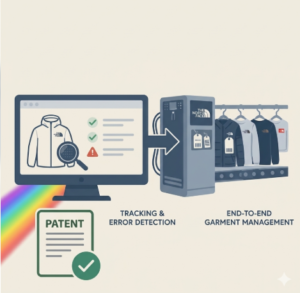
The case concerned an appeal against the refusal of Indian Patent Application No. 202147026139, titled “Systems and Methods for End-to-End Article Management”. The invention involved an integrated manufacturing process for clothing and fabric-based articles, using invisible markers and a spectrophotometer to identify articles, detect manufacturing discrepancies and enable corrective action.
The Patent Office rejected the application for lack of inventive step, relying on prior-art documents D21-D24. The Appellant challenged the refusal before the Madras High Court.
Submissions of the Appellant
The Appellant contended that the Patent Office had erred by evaluating individual features in isolation rather than assessing the claimed invention as a whole.
It submitted that none of D21-D24 disclosed the use of a spectrophotometer to identify invisible markers or the claimed system of continuous monitoring and dynamic correction of manufacturing discrepancies. The invention therefore represented a technical advancement over the cited prior art.
Submissions of the Respondent
The Respondent argued that D21-D24 collectively disclosed automated garment manufacturing, identifier-based tracking, centralised control and the transfer of process information between manufacturing stages.
It contended that a skilled person could combine these known teachings to arrive at the claimed invention and that the use of sensors and markers did not independently establish an inventive step.
Court’s Analysis
The Court held that the Patent Office had incorrectly combined separate prior-art documents to reconstruct the claimed invention.
– Assessment of the invention as a whole: The Patent Office had dissected the claims into individual features rather than properly evaluating the claimed process as a whole.
– Differences in prior art: D21 concerned personalised garment production, while D22 disclosed optically readable codes. D23 and D24 also differed from the claimed invention in their objectives and processes.
– Invisible markers and spectrophotometer: The Court found that the claimed method of identifying garments using invisible markers and a spectrophotometer was not disclosed by the cited documents, even when read collectively.
– Hindsight reconstruction: The Court held that prior-art documents with different objectives could not be retrospectively combined to reconstruct the invention without a proper basis in their teachings.
The Court concluded that the claimed process involved an inventive step, constituted a technical advancement and was capable of industrial application. The Examiner had overlooked these distinctions while refusing the application.
Conclusion
The Madras High Court allowed the appeal, set aside the refusal order dated 16 April 2025 and directed the Controller to grant the patent.
NO EARLY ENTRY FOR GENERICS: DELHI HIGH COURT PROTECTS RUXOLITINIB PATENT
 CASE: INCYTE HOLDINGS CORPORATION & ORS. V. MELODY HEALTHCARE PRIVATE LIMITED (24 SEPTEMBER 2026)
Relevant Sections: Sections 48 and 117A of the Patents Act, 1970.
Brief Facts and Background
The case concerned a patent infringement suit before the Delhi High Court relating to Indian Patent No. 269841, covering the compound Ruxolitinib, used in the treatment of myelofibrosis. The patent was stated to remain valid until 12 December 2026.
The Plaintiffs alleged that Melody Healthcare had advertised and offered Ruxolitinib/Ruxolitinib Phosphate Active Pharmaceutical Ingredient (API) for sale on online commercial platforms. They further alleged that the Defendant had obtained a manufacturing licence, developed a generic version and intended to commence commercial manufacturing and stockpiling before expiry of the patent. The Plaintiffs sought urgent interim protection against the alleged infringement.
Submissions of the Plaintiffs
The Plaintiffs contended that the Defendant’s online listings and offers to supply Ruxolitinib API amounted to an offer for sale infringing their exclusive rights under Section 48 of the Patents Act, 1970.
They relied on online listings, investigation reports and evidence of the Defendant’s manufacturing licence to establish that the Defendant had developed a generic version and intended to commence commercial manufacturing and stockpiling before the patent expired.
The Plaintiffs sought an urgent ex parte ad interim injunction to prevent infringement during the remaining patent term.
Submissions of the Defendant
The order does not record substantive submissions by the Defendant at this stage, as the Court was considering the Plaintiffs’ application for urgent interim relief.
Court’s Analysis
The Delhi High Court held that the Plaintiffs had established a prima facie case for an ex parte ad interim injunction.
- Valid and subsisting patent: Indian Patent No. 269841 remained in force, with expiry scheduled for 12 December 2026.
- Balance of convenience: The Court noted that the Defendant had not yet commercially launched its product, whereas the Plaintiffs’ patent rights remained in force.
- Irreparable injury: The Court found that the Plaintiffs could suffer irreparable loss if interim protection was withheld.
- Urgent relief: The Court granted an injunction restraining the Defendant from manufacturing, stockpiling, importing, selling, offering for sale or supply, exporting, or otherwise dealing in pharmaceutical products containing Ruxolitinib in a manner that infringed the patent.
The injunction was expressly interim and operative until the next date of hearing. The Defendant was permitted to file a reply to the injunction application.
Conclusion
The Delhi High Court granted an ex parte ad interim injunction in favour of the Plaintiffs, restraining the Defendant from activities amounting to infringement of Indian Patent No. 269841. The matter was listed for further proceedings on 20 January 2027.
Note: This was an interim order, not a final determination of patent infringement.
LIFE-SAVING MEDICINES OVER PRICE BARRIERS: COURT CLARIFIES GOVERNMENT’S PATENT POWERS
 CASE: IN RE EXORBITANT PRICING OF LIFE SAVING PATENTED MEDICINES (28 SEPTEMBER 2026)
Relevant Sections: Sections 83, 92, 99 and 100, Patents Act, 1970.
Brief Facts and Background
The matter arose from a writ petition filed by a retired bank employee suffering from breast cancer, who sought government intervention to make Ribociclib, a patented cancer medicine, affordable. The medicine reportedly cost approximately ₹58,140 for 21 days of treatment.
Following the petitioner’s death during the proceedings, the Kerala High Court continued examining the issue suo motu to address the broader concern of exorbitant pricing of life-saving patented medicines.
Submissions of the Petitioner / Amicus Curiae
The Amicus Curiae argued that the Central Government should exercise its powers under Sections 92 and 100 of the Patents Act to ensure access to affordable life-saving medicines.
It was submitted that patent protection should not prevent access to essential medicines, particularly where exorbitant prices compromise patients’ ability to obtain necessary treatment. Section 100 was pressed as the appropriate mechanism for government intervention.
Submissions of the Respondents
The proceedings examined the scope of government intervention under the Patents Act and the balance between patent holders’ exclusive rights and public-health obligations.
The Court considered the statutory framework governing government use of patented inventions, the need to protect public health and the absence of sufficient data establishing the affordability of the medicines in question.
Court’s Analysis
The Kerala High Court held that Section 100 permits the Government to use a patented invention to manufacture a medicine and sell it to needy patients on a non-commercial basis.
- Government use of patents: Section 100, read with Section 99, permits government use of patented inventions, including the manufacture and non-commercial sale of patented medicines.
- Public health obligations: The Court interpreted the expression “purposes of Government” in light of Articles 21 and 47 of the Constitution, which recognise the importance of protecting life and improving public health.
- Exorbitant pricing: The Court held that Section 100 may be invoked where government intervention is necessary, including when a patented medicine is unaffordable because of its exorbitant price.
- Government discretion: The Court declined to compel the Central Government to invoke Section 100 for the medicine in question. Instead, it held that the Government must collect the necessary affordability data and determine whether intervention is warranted.
Conclusion
The Kerala High Court disposed of the writ petition with findings clarifying the scope of Section 100 of the Patents Act, 1970, and the Government’s authority to use patents to improve access to life-saving medicines.
PATENTS AND TRADE SECRETS: COURT DRAWS THE LINE AT MISUSE OF CONFIDENTIAL KNOW-HOW
 CASE: NOCIL LTD. V. FINORCHEM LTD. & ANR. (7 OCTOBER 2026)
Relevant Sections: Sections 48(b), 64, 104A and 107, Patents Act, 1970.
Brief Facts and Background
The matter concerned a patent infringement suit before the Calcutta High Court involving the manufacture of 4-Aminodiphenylamine (4-ADPA), a chemical intermediate used in the production of rubber antioxidants.
NOCIL held three Indian process patents relating to the manufacture of 4-ADPA. Its former employee, who had been involved in developing and implementing the manufacturing processes and had signed an NDA, subsequently joined Finorchem, which proposed to manufacture the same chemical.
NOCIL alleged that Finorchem’s proposed manufacturing process substantially replicated its patented processes and that its former employee had breached confidentiality obligations by misusing trade secrets.
Submissions of the Appellant / Plaintiff
NOCIL contended that Finorchem’s proposed manufacturing process was substantially similar to its patented processes, with only minor variations intended to avoid infringement.
It further argued that the former employee had access to confidential technical information and trade secrets protected under the NDA. The striking similarity between the parties’ Environmental Impact and Risk Assessment (EIRA) reports, together with changes in Finorchem’s disclosed processes, supported the allegation of copying and misuse of confidential information.
NOCIL also submitted that Finorchem had failed to raise a credible challenge to the validity of its established patents.
Submissions of the Respondents
Finorchem argued that the grant of a patent did not establish its validity and that it had raised a credible challenge sufficient to resist interim relief. It also disputed the applicability of Section 104A and maintained that its manufacturing process differed from NOCIL’s patented processes.
The former employee denied having access to or disclosing confidential information and argued that the allegations were speculative. The respondents also disputed the alleged breach of confidentiality and infringement.
Court’s Analysis
The Calcutta High Court found a strong prima facie case of patent infringement and breach of confidentiality.
– Patent validity: Although a granted patent does not enjoy an automatic presumption of validity, the Court held that established patents that had been examined and commercially exploited for years deserved due weight at the interim stage.
– Burden of proof under Section 104A: Since the competing processes concerned the same product, the Court held that the burden shifted to Finorchem to establish that its manufacturing process was different from the patented process.
– Substantial similarity: The Court found that the parties’ EIRA reports were virtually identical and that the manufacturing processes shared essential steps. The differences relied upon by Finorchem were prima facie minor and inconsequential.
– No mosaicing of prior art: The Court reiterated that separate prior-art references could not be combined indiscriminately to argue that the patented process was already known.
– Protection of trade secrets: The former employee’s NDA and involvement in developing the processes supported the duty of confidentiality. An employee or former employee cannot exploit another’s confidential technical information and trade secrets for personal or commercial gain.
– Interim injunction: The Court found that the respondents had failed to raise a credible challenge to the patents and that the balance of convenience and risk of irreparable injury favoured NOCIL.
Conclusion
The Calcutta High Court granted interim relief in favour of NOCIL, restraining the respondents in terms of the reliefs sought in the application. The Court noted that Finorchem had not yet commenced commercial production and held that the evidence warranted protection pending trial.
Note: The findings were prima facie findings at the interim stage; final infringement and confidentiality issues remain subject to trial.
SERVING CONFUSION? COURT RESTRAINS ALLEGED MISUSE OF ‘BENNE’ TRADEMARK
 CASE: SHIMOW HOSPITALITY PRIVATE LIMITED V. M/S BENNE DELHI THROUGH ITS PROPRIETOR (16 OCTOBER 2026)
Relevant Sections: Sections 27 and 29, Trade Marks Act, 1999.
Brief Facts and Background
The matter concerned a trademark infringement and passing-off suit before the Delhi High Court involving the mark ‘BENNE’, used by Shimow Hospitality for its South Indian restaurant business.
The Plaintiff claimed that it had operated under the BENNE brand since 2024 and had built substantial goodwill through its restaurant outlets, publicity and quality control. It alleged that the Defendant, operating as Benne Delhi, used an identical mark for a cloud kitchen or restaurant offering similar South Indian cuisine, creating a likelihood of consumer confusion.
The Plaintiff sought an interim injunction restraining the Defendant from using ‘BENNE’, ‘BENNE DELHI’ or any identical or deceptively similar mark.
Submissions of the Plaintiff
The Plaintiff contended that its continuous use of the BENNE trademark had established goodwill and reputation, associating the mark with its restaurant business.
It argued that the Defendant’s adoption of an identical mark for identical services was likely to mislead consumers into believing that the businesses were connected. The Plaintiff also relied on the Defendant’s trademark application, filed in April 2026 on a proposed-to-be-used basis, to support its claim of prior use.
Submissions of the Defendant
The order does not record substantive submissions from the Defendant at this stage. The Court considered the Plaintiff’s application for urgent interim relief and issued notice to the Defendant.
Court’s Analysis
The Delhi High Court found that the Plaintiff had established a prima facie case for an ex parte ad interim injunction.
-
- Identical marks and services: The Defendant was allegedly using BENNE for the same category of restaurant services and cuisine, increasing the likelihood of consumer confusion.
- Prior use and goodwill: The Plaintiff’s claimed use since 2024, together with the material placed on record, supported its request for interim protection.
- Balance of convenience: The Court found that the balance of convenience favoured the Plaintiff.
- Irreparable injury: The Court held that denying interim relief could cause irreparable loss and injury to the Plaintiff.
- Urgent relief: The Court also exempted the Plaintiff from pre-institution mediation under Section 12A of the Commercial Courts Act, 2015, in view of the urgent interim relief sought.
Conclusion
The Delhi High Court restrained Benne Delhi from using ‘BENNE’, ‘BENNE DELHI’ or any identical or deceptively similar mark in connection with its business in a manner that would pass off its services as those of the Plaintiff. The injunction was granted until the next date of hearing.
SILENCE SPEAKS: MADRAS HIGH COURT DISMISSES TRADEMARK CHALLENGE AFTER 15 YEARS OF INACTION
 CASE: RPG ENTERPRISES LIMITED V. THE REGISTRAR OF TRADE MARKS & ORS. (2026)
Relevant Sections: Sections 33 and 57, Trade Marks Act, 1999.
Brief Facts and Background
The matter concerned a rectification petition filed by RPG Enterprises Limited before the Madras High Court, seeking removal of the registered trademark ‘RPG MARBLE PVT. LTD.’ belonging to the Respondent.
The Petitioner claimed prior use of the trademark ‘RPG’ since 1979 and asserted that it had acquired substantial goodwill and reputation. It alleged that the Respondent’s adoption of an identical dominant element was likely to cause confusion and mislead consumers regarding a commercial association between the parties.
The Petitioner also challenged the Respondent’s registration on the ground of incorrect classification and dishonest adoption.
Submissions of the Plaintiff/Petitioner
The Petitioner contended that its trademark ‘RPG’ had acquired substantial goodwill and was recognised as a well-known trademark. It argued that the Respondent’s use of the identical dominant element amounted to infringement of its trademark rights.
It further submitted that the Respondent’s adoption was dishonest and that its registration under Class 42 was incorrect, as its business activities were allegedly covered under Class 19.
The Petitioner denied having acquiesced to the Respondent’s use and maintained that it had no actual knowledge of the impugned trademark until 2017.
Submissions of the Defendants/Respondents
The Respondents argued that they had independently adopted ‘RPG’ in 2000 using the initials of their directors and had continuously used the mark since then.
They further contended that the Petitioner had knowledge of their trademark as early as 2002 but initiated rectification proceedings only in 2017. Accordingly, the petition was barred by delay, laches and acquiescence under Section 33 of the Act.
Court’s Analysis
The Madras High Court primarily examined whether the Petitioner’s conduct amounted to acquiescence under Section 33 of the Trade Marks Act, 1999.
- Prior knowledge: The Court considered the legal notice allegedly issued by the Petitioner in February 2002 and the evidence brought out during cross-examination, indicating prior knowledge of the Respondent’s trademark.
- Delay and acquiescence: The Court noted that despite having knowledge of the Respondent’s mark, the Petitioner initiated rectification proceedings only in 2017, after nearly fifteen years.
- Application of Section 33: Relying on the Supreme Court’s decision in Union of India v. N. Murugesan (2022), the Court observed that acquiescence involves conscious inaction despite knowledge of the relevant circumstances.
- Other issues: Having decided the matter on the ground of acquiescence, the Court did not examine the remaining issues concerning deceptive similarity, dishonest adoption and incorrect classification.
Conclusion
The Madras High Court dismissed the rectification petition, holding that the Petitioner’s prolonged inaction despite having prior knowledge of the Respondent’s trademark amounted to acquiescence under Section 33 of the Trade Marks Act, 1999.
The decision highlights the importance of taking timely action against competing trademark registrations, as prolonged inaction despite knowledge may defeat a subsequent challenge on the ground of acquiescence.
DIFFERENT PRODUCTS, IDENTICAL SOUND: COURT UPHOLDS ‘ANNAPOORNA’ TRADEMARK INJUNCTION
 CASE: ANNAPURNA SWADISHT LIMITED V. GEF FOODS INDIA PRIVATE LIMITED, DECIDED ON 9 OCTOBER 2026.
Relevant Sections: Sections 29(2), 29(3), 29(4) and 34 of the Trade Marks Act, 1999.
Brief Facts and Background
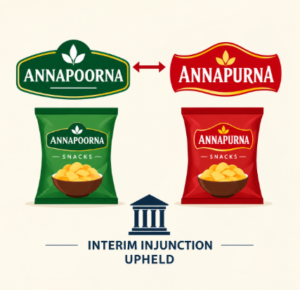
The matter concerned a trademark infringement and passing-off suit before the Madras High Court involving the marks ‘ANNAPOORNA’ and ‘ANNAPURNA’.
The Plaintiff, GEF Foods India Private Limited, claimed rights over ‘ANNAPOORNA’, which had been used by its predecessor since 1980 for spices and masala products. The Defendant, Annapurna Swadisht Limited, used ‘ANNAPURNA’ for packaged snacks and namkeens.
The Plaintiff alleged that the Defendant’s use of the phonetically identical mark was likely to cause consumer confusion and sought an injunction. The Court had initially granted an ex parte interim injunction, which the Defendant sought to vacate.
Submissions of the Plaintiff
The Plaintiff contended that its predecessor had continuously used the trademark ‘ANNAPOORNA’ since 1980 and had acquired substantial goodwill and reputation. It argued that the Defendant’s adoption of the phonetically identical mark ‘ANNAPURNA’ was likely to cause consumer confusion and create an impression of commercial association between the parties. It further submitted that its prior use predated the Defendant’s adoption in 2015 and that both parties operated in the food industry, catering to overlapping consumer bases. The Plaintiff also denied acquiescence, stating that its predecessor had actively opposed the Defendant’s trademark applications since 2023.
Submissions of the Defendant
The Defendant contended that it had independently and honestly adopted the mark ‘ANNAPURNA’ in 2015 and had established its own goodwill through continuous business operations. It argued that the parties dealt in different products, with the Plaintiff primarily selling spices and masala powders while the Defendant dealt in packaged snacks and namkeens. It further submitted that there was no evidence of actual consumer confusion and that ‘Annapurna’ was a commonly used religious expression associated with food. The Defendant also alleged that the Plaintiff had knowledge of its trademark application since 2023 but approached the Court only in 2026, thereby demonstrating delay and acquiescence.
Court’s Analysis
The Madras High Court examined the similarity between the marks and the likelihood of consumer confusion while considering the Defendant’s application to vacate the interim injunction.
- Phonetic similarity: The Court observed that both marks were phonetically identical and could create an impression of commercial association.
- Nature of goods: Differences between spices and packaged snacks did not eliminate the possibility of confusion, considering their overlapping trade channels and consumer base.
- Acquiescence: Mere delay did not constitute acquiescence, particularly when the Plaintiff’s predecessor had actively opposed the Defendant’s trademark applications.
- Religious significance: The religious association of ‘Annapurna’ did not prevent its protection as a trademark identifying commercial origin.
- Interim protection: The Court found a prima facie case, balance of convenience and likelihood of irreparable injury in favour of the Plaintiff.
Conclusion
The Madras High Court dismissed the Defendant’s applications seeking vacation of the interim injunction and continued the injunction until disposal of the suit, restricting the Defendant’s use of the impugned mark in relation to the goods covered by the Court’s order.